
Painting an interior is not something you do on a whim. From choosing the right paint to preparing the surface and selecting the correct tools, homeowners regularly face a wide range of questions.
At Pygmalion.be, we support our customers every day with their projects. Here are answers to the most frequently asked questions, to help you achieve a lasting, professional finish.
Do you always need to apply a primer?
In most cases, yes.
A primer evens out the surface, improves the adhesion of the topcoat and reduces paint consumption. It also contributes to a smoother, more uniform finish.
It is particularly recommended when:
-
the wall is new
-
you are going from a dark colour to a lighter shade
-
the surface is porous (plaster, filler, MDF)
-
the wall has been repaired
Skipping the primer may seem cost-effective in the short term, but it often leads to higher paint consumption and a lower-quality result.
How many coats of paint should you apply?
The professional rule remains unchanged: two coats are needed for an optimal result.
A single coat generally lacks opacity, shows wear more quickly and does not last as long. Even with a premium paint, applying two coats guarantees depth of colour and better durability.
It is essential to respect the drying time indicated by the manufacturer. Applying a second coat too soon can damage the first.
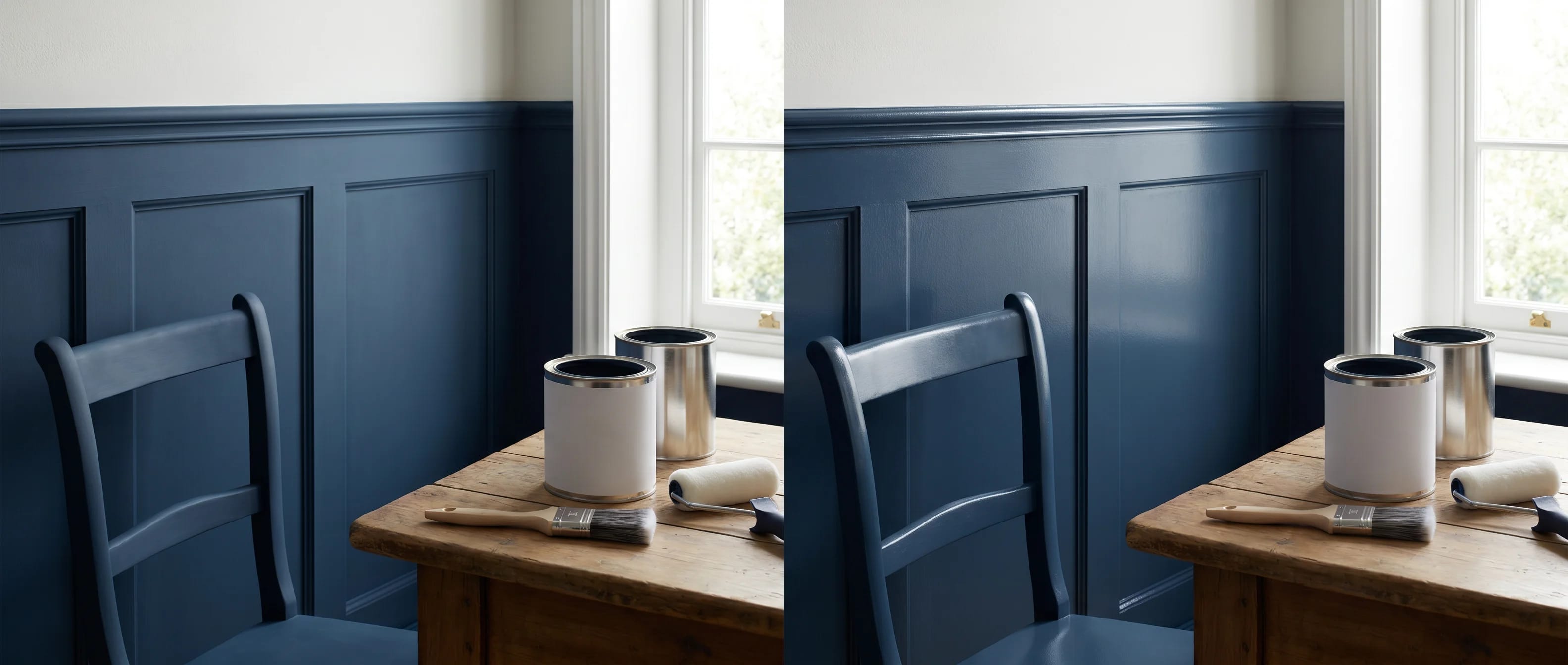
Which finish should you choose: matt, velvet or satin?
The choice depends mainly on the room and how much wear the walls will be subjected to.
Matt conceals imperfections very effectively and provides an elegant finish. It is ideal for ceilings and rooms with low traffic.
Velvet is today one of the best all-round options. Its slightly powdery appearance remains aesthetically pleasing while being more durable than a traditional matt. It is perfectly suited to living areas.
Satin is the most hardwearing finish. Easy to clean, it is recommended for kitchens, bathrooms, hallways and high-traffic areas.
For a balanced interior, velvet is often the safest choice.
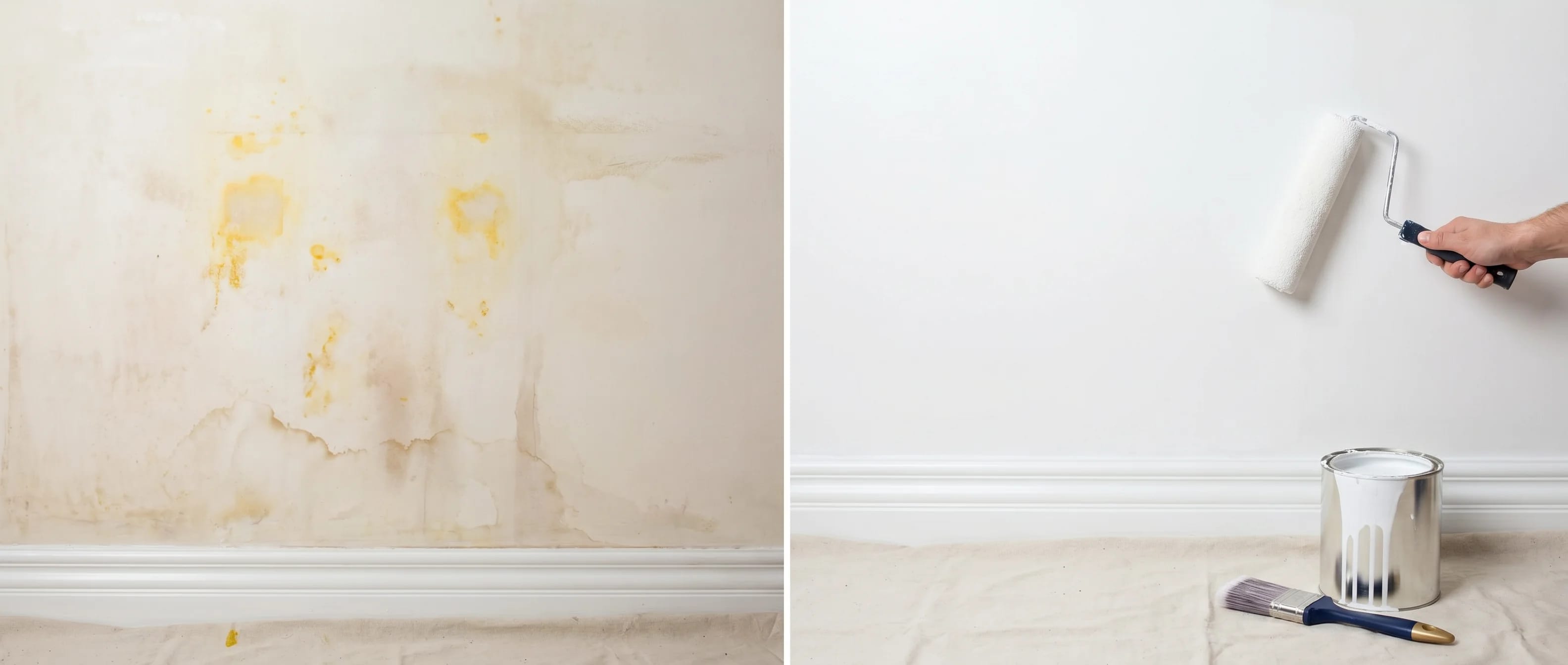
Can you paint directly over an already painted wall?
Yes, provided the surface is properly prepared.
Before painting, it is essential to:
-
clean the wall
-
degrease if necessary
-
lightly sand to improve adhesion
-
fill any defects
Paint will never adhere durably to a dirty or greasy surface. It is widely acknowledged that the quality of the result depends largely on the preparation.
Which paint should you choose for a kitchen or bathroom?
These rooms are exposed to significant constraints: humidity, temperature variations, splashes and grease.
It is therefore recommended to opt for a washable paint, capable of withstanding regular cleaning without deteriorating.
Always check the wet scrub resistance class (EN 13300 standard):
-
Class 1 and 2: very high resistance
-
Class 3: adequate resistance for light cleaning
For heavily used spaces, choosing a Class 1 or 2 paint is the more durable option.
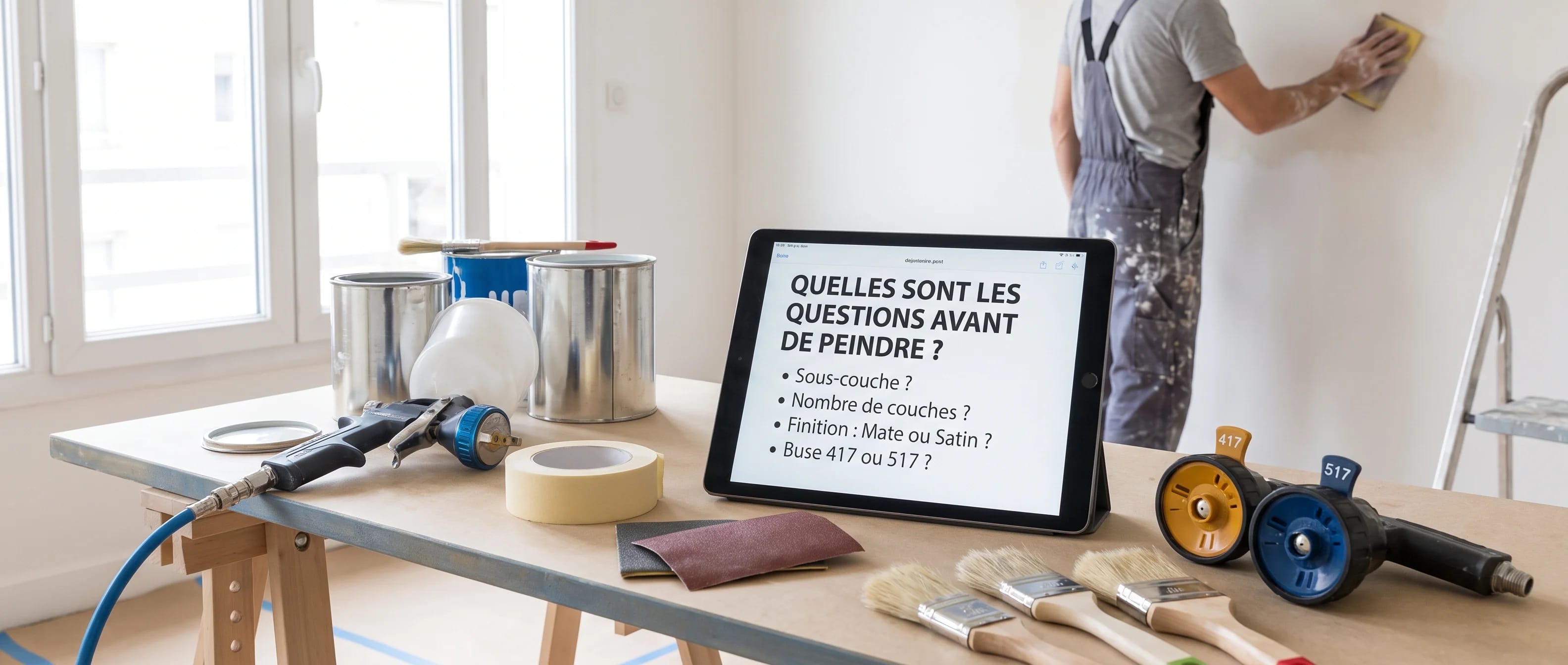
Which tip should you use to spray walls and ceilings: 417 or 517?
The choice of tip directly influences the quality of the finish, paint consumption and application speed.
Tip 417: precision and finish
The 417 tip projects a narrower spray pattern with a lower paint flow rate. It is particularly suited to:
-
fluid paints
-
work requiring greater precision
-
well-prepared surfaces
-
jobs where you want to minimise overspray
It offers better control, but application is slightly slower.
Tip 517: output and speed
The 517 tip delivers more material and covers a wider surface area. It is recommended:
-
for walls and ceilings
-
for large surface areas
-
for standard wall paints
-
to save time on site
It is generally the most widely used tip among professionals for interior work.
Key takeaway:
417 for precision, 517 for productivity.
For a complete property, the 517 is often the most efficient choice.
How do you avoid roller marks?
Roller marks most often appear due to insufficient paint or poor technique.
To achieve a uniform finish:
-
use a good-quality roller
-
load it with enough paint
-
cross your strokes
-
work in sections of approximately one square metre
-
always finish in the same direction
The most common mistake is overworking the paint. A generous application allows the film to lay out more smoothly.
How long should you wait before using a room again?
Even if the paint appears dry after a few hours, it is advisable to wait 24 to 48 hours before moving furniture back in.
As for cleaning the walls, it is better to wait two to three weeks to allow the paint to reach its maximum resistance.
Are eco-friendly paints just as effective?
Formulations have evolved considerably in recent years. Low-emission paints now offer excellent opacity, good durability and superior application comfort thanks to their low odour.
They are particularly well suited to bedrooms, homes with children and poorly ventilated spaces.
The advice professionals always give
Avoid choosing a paint based solely on its price.
A quality paint covers better, lasts longer, cleans more easily and delivers a noticeably superior finish. In the long run, it often proves to be the more economical choice.
In summary
A successful painting project rests on three essential elements:
-
thorough preparation
-
a paint suited to the surface
-
careful application
At Pygmalion.be, we select high-performance paints to guarantee a reliable and lasting result, whatever your project.
If you are in any doubt, the best reflex is to ask for advice before you start. Choosing the right product makes all the difference.