


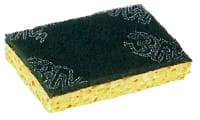
Scotch Brite Green Scouring Sponge
Green scouring sponge that removes paint residue and stubborn dirt without scratching delicate surfaces. Abrasive fibres for effective cleaning of tools and surfaces.
3,20 €
24-48hSand walls, wood and plaster before finishing. Flexible and easy to handle, reaches corners and curved surfaces without scratching.

Estimated delivery: 24-48h
The Standard Abrasive Sponge is a flexible hand-sanding block that adapts to both flat and complex surfaces. Fitted with aluminium oxide abrasive on all four sides, it can be used dry or wet depending on site requirements. Ideal for sanding curves, edges and hard-to-reach areas, it supports both professional painters in their finishing work and discerning homeowners seeking professional results.
For dry sanding work, the sponge effectively removes imperfections on wood, plasterwork and painted surfaces. Coarse grit is suitable for stripping and initial preparation, medium grit is used for intermediate sanding, whilst fine grit ensures finishing before painting. The flexibility of the backing allows you to follow contours without marking edges.
When wet sanding, the sponge significantly reduces dust and improves abrasive longevity. Lightly dampen the surface and sponge, sand with regular circular movements, then rinse frequently to remove residue. This method is particularly suitable for primers and varnishes between coats.
Replace the sponge once the grit loses its cutting power or the backing becomes deformed. Clean with clear water after use to extend its lifespan. For large flat surfaces, favour a rigid sanding block; the abrasive sponge excels on reliefs, mouldings and profiles.
| Backing | Flexible synthetic material |
| Grain type | Aluminium oxide |
| Mode of use | Dry or wet |
| Applications | Sanding, finishing, preparation before painting |
| Available grit sizes | Fine, Medium, Coarse |
| Compatible materials | Wood, metal, filler, primer |
| Number of active sides | 4 |
The standard abrasive foam sponge offers a major advantage on delicate surfaces: its flexibility prevents paint penetration at edges and sharp corners, a common problem with rigid blocks. For your renovation projects in Belgium, it's practical to always have all three grit sizes on hand: you'll save time by avoiding unnecessary trips. A tip from our Pygmalion specialists: use the wet sponge for the final sanding of interior woodwork, you'll achieve a perfectly homogeneous surface without streaks and with less dust, a real advantage in occupied homes.
For sanding a primer before applying the topcoat, opt for fine grit. It produces a perfectly smooth surface without removing too much material or creating visible scratches under the paint.
Absolutely, it's actually one of its main advantages. The flexible synthetic backing conforms perfectly to contours, allowing you to sand mouldings, balusters, rounded surfaces and all complex profiles uniformly.
Dry sanding is suitable for most preparation work and generates dust. Wet sanding significantly reduces dust, extends the sponge's lifespan and produces a finer finish, ideal for finishing stages or work in occupied interiors.
Lifespan depends on usage intensity and the material being sanded. Thanks to its four active sides, you can extend its use by successively using each side. The sponge is designed for effective and durable cutting, but should be replaced when the grit becomes smooth.
The standard abrasive sponge with aluminium oxide grains is suitable for sanding wood, metal, filler, primer and many other materials. It is particularly effective for preparation work before bonding or painting on various substrates.
Green scouring sponge that removes paint residue and stubborn dirt without scratching delicate surfaces. Abrasive fibres for effective cleaning of tools and surfaces.
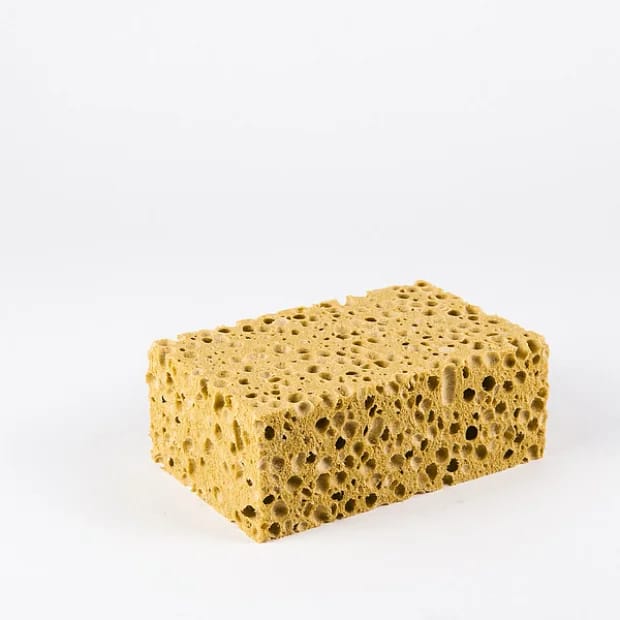
Robust sponge for removing fresh paint residue from tiles, floors and work surfaces. Resistant cellular structure that absorbs effectively without breaking down.
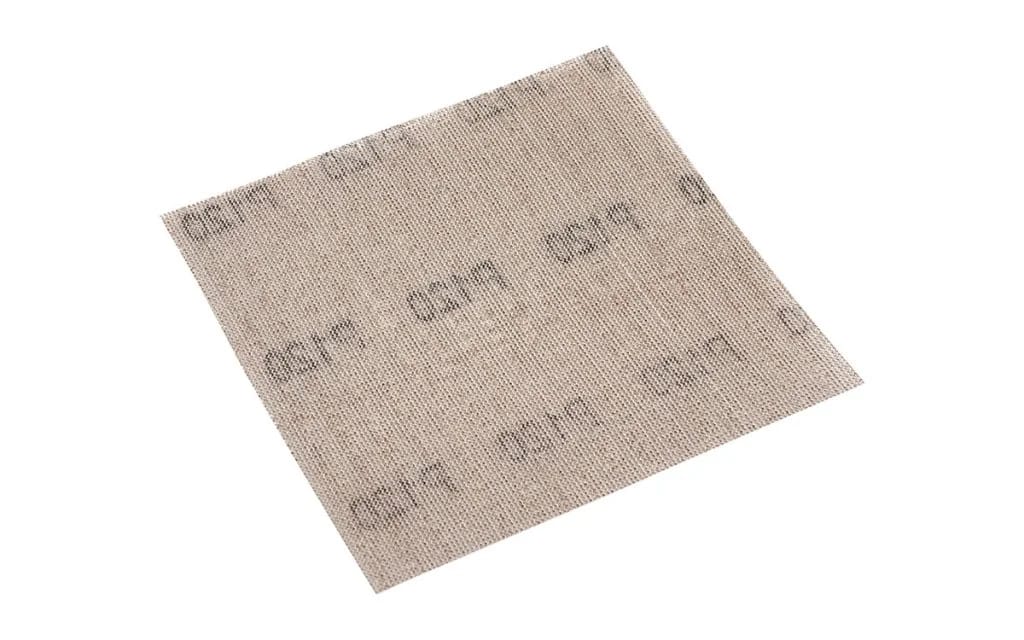
Fine sanding of joint compound on corners (up to 3 mm) without clogging. Quick grit change thanks to the attachment system on ERGOLISS foam pads.
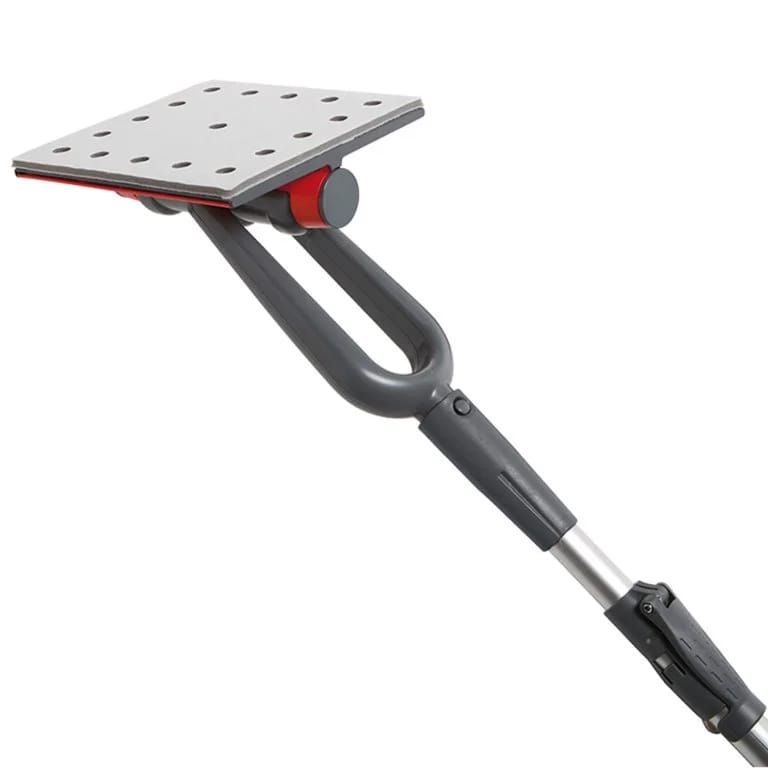
Sand walls and ceilings without a ladder using the telescopic pole, while vacuuming dust directly during sanding. Clean finish and tidy site in one action.