


SPS
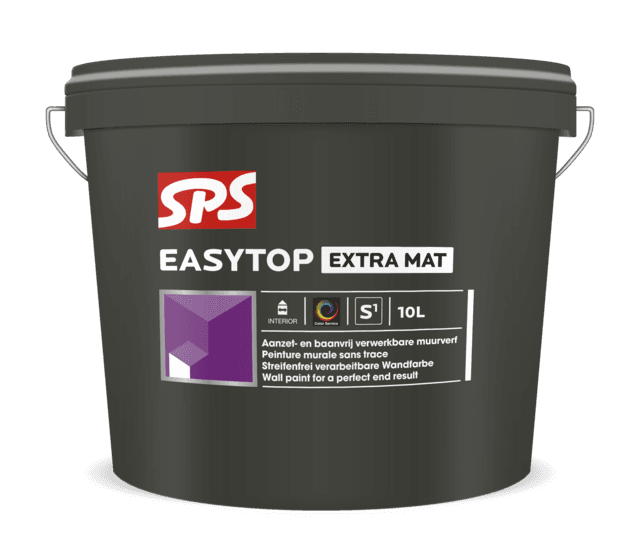
EASYTOP EXTRA MAT A TEINTER
Extra-matt tintable wall paint for interior walls and ceilings. It applies easily without leaving marks, for a uniform finish.
94,01 €
24-48hSatin acrylic paint for facades and interior walls, including damp rooms. It withstands weather and abrasion for a durable, high-coverage finish.
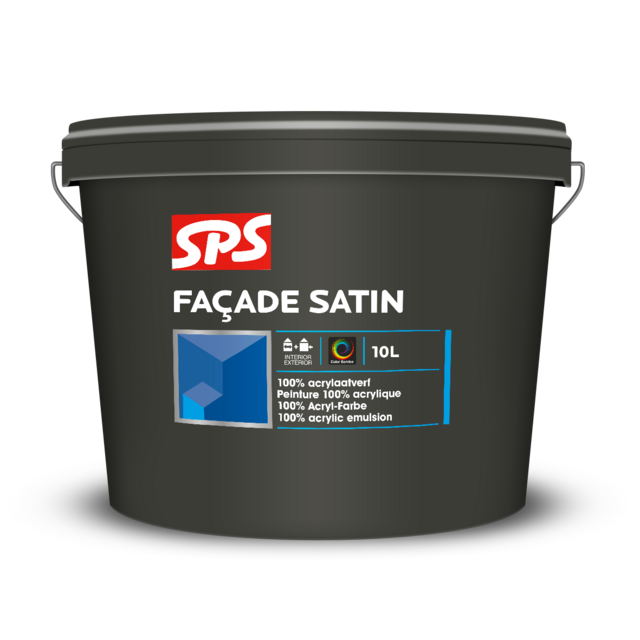
Estimated delivery: 24-48h
SPS Facade Satin is a white, 100% acrylic satin wall paint designed for exterior facades as well as interior walls. It offers a durable finish, good coverage and good resistance to weather and abrasion. It is also suitable for damp rooms. A single product can therefore be used on a job site that combines exterior and interior work.
The quality of the result depends first and foremost on the substrate. It must be clean, sound, dry and cohesive. On a facade, remove dirt, algae, moss and any chalking or flaking areas. Fill cracks and spalled areas with a repair product suitable for masonry. On a very absorbent or heavily deteriorated substrate, apply a fixative or a suitable undercoat before painting. Consult the manufacturer's technical data sheet when choosing the primer.
Apply the paint with a roller for large surfaces, and with a brush for corners, frames and touch-ups. Work in full sections, without stopping in the middle of a wall surface, to keep a uniform appearance. Avoid painting in direct sunlight, on a very hot substrate, in the rain or in strong wind. A facade is ideally painted in dry, stable weather.
Clean tools with water immediately after use. For a large facade, plan the total quantity in advance and mix the cans together before starting, to avoid any colour difference from one section to another.
| Nature | Acrylique 100 %, à base d'eau |
| Teinte | Blanc |
| Finition | Satinée |
| Utilisation | Intérieur et extérieur, pièces humides |
| Perméabilité | Perméable à la vapeur d'eau |
| Conditionnements | 1 L, 4 L, 10 L |
| Résistance au frottement | Classe 1 (DIN EN 13300) |
A satin finish reflects more light than a matt paint, so it highlights substrate defects: plaster repairs, poorly sanded fillings, variations in texture. On a facade lit at a raking angle by the sun or an interior wall lit from the side, take more care over the preparation than over the paint itself. Sand and dust off repairs, then check the surface condition in raking light before opening the can.
Among professionals, the rule is never to stop in the middle of a section. Plan your stopping points at corners, downpipes or changes of plane, and keep a wet edge so you can continue without visible lap marks. Reload the roller regularly and slightly overlap your passes to achieve a uniform appearance.
Oui. Le fabricant la destine aux façades extérieures et aux murs intérieurs. Elle convient aussi aux pièces humides.
SPS Facade Satin est classée en classe 1 de résistance au frottement selon la norme DIN EN 13300, ce qui correspond au meilleur niveau de cette classification.
Les deux sont des peintures acryliques 100 % pour l'intérieur et l'extérieur, au pouvoir couvrant élevé et classées en classe 1 de résistance au frottement. La différence principale tient à la finition : satinée pour l'une, mate pour l'autre. Le satiné donne un aspect plus lumineux mais met davantage en évidence les irrégularités du support.
Oui, elle est décrite comme perméable à la vapeur d'eau. Cela convient à un support de maçonnerie exposé à l'humidité, à condition qu'il soit sain et correctement préparé.
SPS Facade Satin existe en 1 L, 4 L et 10 L. Le 1 L convient aux retouches et aux petits éléments. Le 4 L et le 10 L sont plus adaptés aux pièces entières et aux façades. Le rendement dépend du support : consultez la fiche technique du fabricant pour estimer la quantité nécessaire.
Extra-matt tintable wall paint for interior walls and ceilings. It applies easily without leaving marks, for a uniform finish.
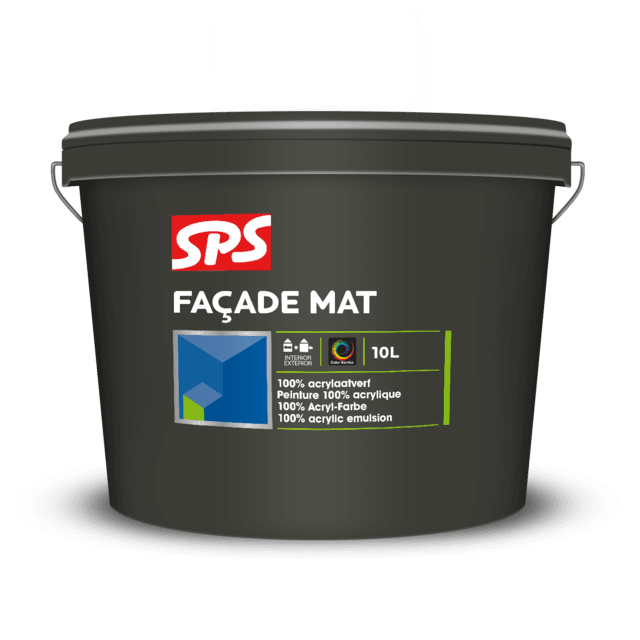
Tintable matt acrylic paint for facades and interior walls, including damp rooms. It withstands weather and abrasion for a long-lasting finish.
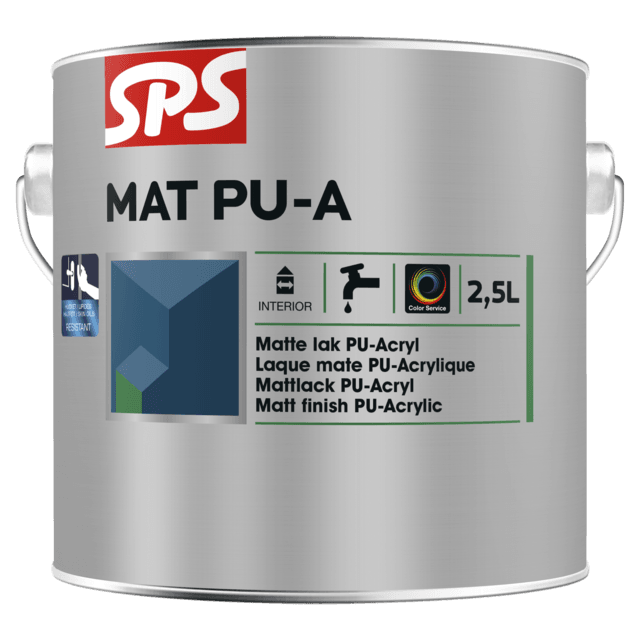
Water-based matte acrylic PU lacquer for interior use, resistant to scratches and skin grease. Fast-drying, virtually odourless, with excellent long-term colour retention.
Matt acrylic paint for exterior facades and interior walls, including damp rooms. Resistant to weather and rubbing for a durable, high-coverage finish.